


Toilet Keeps Clogging Every Few Days? 7 Causes and When to Call a Plumber
A toilet that clogs again within days has a cause that plunging does not remove. The usual suspects are what goes into the bowl, a weak flush, hard-water scale in the rim holes, a partial clog in the trap or branch line, a blocked vent, roots in the sewer lateral, or a worn toilet. Working through them in order narrows the cause quickly, and a plumber handles the ones that sit inside the walls or underground. Downey Plumbing Heating & Air Conditioning holds CA License #731172, which you can verify with the Contractors State License Board. We hold a BBB A+ rating and a 4.8-star record across 850+ Yelp reviews, and our team has served Southern California since 1930.
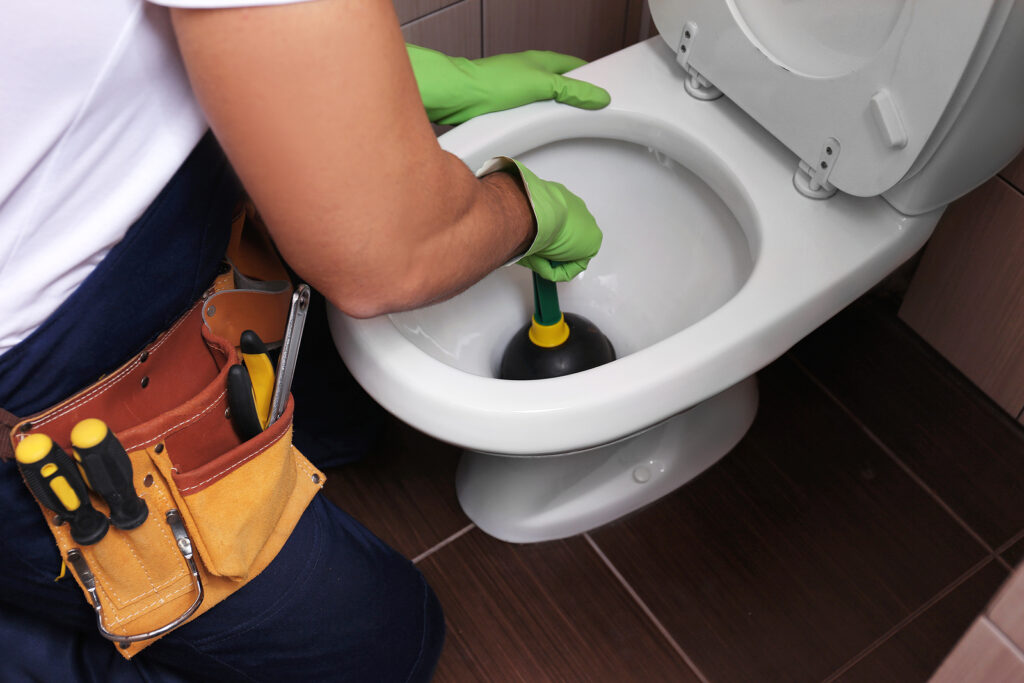
This guide explains each cause, which checks are safe to do yourself, and which signs point to a bigger problem in the sewer line. It also covers Downey’s hard water, the City’s rules for sewer laterals, and what to fix before holiday guests arrive.
- Only one toilet clogs: start with the toilet. Check the tank water level, the supply valve, the rim holes, and what you flush.
- Other fixtures act up too: gurgling, a shower that backs up, or slow drains elsewhere point to the branch line, the vent, or the sewer lateral.
- Safe DIY: a flange plunger, flush-part checks, and cleaning the rim holes. Cabling lines, roof vent work, and lateral repairs belong to a plumber.
- Call for service: a second clog within days of plunging, a sewage smell, or water that rises toward the rim. Stop flushing until a plumber checks the line.
Stop the Repeat Clogs With a Licensed Plumber
Our licensed plumbers clear toilet clogs, use a camera to find the cause when a clog keeps returning, and fix what they find. Call 562-646-1221 to book toilet unclogging and cleaning in Downey, or request service online.
What Does It Mean When a Toilet Keeps Clogging?
One clog usually traces to one event, such as too much paper or a toy in the bowl. A toilet that clogs again within days points to a cause that survives plunging. That cause can sit in the toilet, in the pipe under it, or in the line that carries waste to the street.
Three questions sort the causes. Does only this toilet clog, or do other fixtures slow down too? Does the clog follow a heavy flush, or does it happen after a normal one? Do you hear gurgling or see water move in a tub or shower? The answers separate a toilet problem from a drain problem, and the table in the warning signs section maps each pattern to its likely cause.
Local conditions matter too. The City of Downey notes that builders constructed most of its homes in the 1940s through 1960s, and the City’s water quality reports list very hard water. Both facts show up in the causes below.
7 Causes of a Toilet That Keeps Clogging
Cause 1: Too Much Paper, Wipes, or Items That Do Not Break Down
Toilet paper breaks apart in water, and most other products do not. The Sanitation Districts of Los Angeles County state that baby wipes, disinfecting wipes, and personal hygiene wipes can clog plumbing when flushed, and that wipes labeled flushable may not break down. The same guidance lists paper towels, towelettes, mop refills, and diapers among the items that do not belong in a toilet.
Cotton balls, dental floss, and food scraps cause the same trouble. Our post on whether you can flush food down the toilet answers the most common questions about what to keep out of the bowl. A lined wastebasket next to the toilet makes the habit easy, and flushing in two steps handles a heavy load of paper.
Cause 2: A Weak Flush From Tank or Supply Problems
A toilet needs a full, fast rush of water to clear the trap. Kohler’s toilet troubleshooting chart lists four corrections for a poor flush: adjust the tank water level to match the waterline, open the water supply shut-off valve fully, clear obstructions in the trapway, jet, or bowl rim holes, and clear obstructions in the soil pipe or vent pipe. The first two take a minute to check, and the last two lead into the causes below.
Our post on common toilet problems and fixes covers running toilets, weak flushes, and base leaks in more detail.
Cause 3: Hard-Water Scale in the Rim Holes
Water enters the bowl through small holes under the rim and through a jet at the bottom of the bowl. Kohler’s guidance on poor rim wash states that hard water deposits can restrict the water flow through the rim holes, which weakens the wash and the flush.
Downey’s water is hard. The City of Downey’s 2022 Public Health Goals report includes annual water quality reports for 2019, 2020, and 2021 that list average total hardness of 15, 19, and 15.7 grains per gallon, roughly 257 to 325 mg/L. The U.S. Geological Survey ranks water above 180 mg/L as very hard.
Kohler describes the fix. Shut off the water supply and flush to empty the tank and bowl, clear stubborn rim holes with a paper clip or a finishing nail, and pour a lime-dissolving cleaner into the rim chamber, where it needs 8 to 24 hours to dissolve the deposits. Follow the product label, and never mix cleaners. Our post on how hard water damages plumbing explains where else scale builds up, and our water filtration systems list treatment options for the whole home.
Cause 4: A Partial Clog in the Trap or Branch Line
A toilet drains through a curved trap and then into a branch line that joins the main drain. A partial blockage in either one lets a normal flush through slowly, and the next heavy flush overwhelms it. This Old House’s plumbing guide notes that slow or incomplete draining can mean a clog in the toilet trap or drain line, and that when plunging fails, the problem may sit further down the drain line or in the vent system.
A plumber clears that kind of blockage with a closet auger or a drain cable and confirms the line with a camera. When buildup coats the pipe wall, hydro jetting washes it clear, and our post on hydro jetting for stubborn drain clogs explains when it makes sense. Our drain cleaning service covers the full range of clearing methods.
Cause 5: A Blocked or Partly Blocked Plumbing Vent
Vent pipes let air into the drain system so waste water can flow freely. This Old House explains that blocked vents create a vacuum effect, and that a gurgling toilet usually comes from negative air pressure in the drain pipes. Kohler also lists clearing the vent pipe among its corrections for a poor flush.
Vent openings sit on the roof, so the work belongs to a plumber. Our post on drain plumbing vents explains how vents work and what goes wrong with them.
Cause 6: Tree Roots or a Damaged Sewer Lateral
The sewer lateral is the pipe that carries waste from your home to the sewer in the street. The Sanitation Districts state that tree roots intrude into sewer pipes through cracked or separated joints, and they advise against planting trees or shrubs near the lateral. The City of Downey’s homeowner alert on sewer laterals and tree roots explains that roots can clog or damage laterals, that a leaking pipe attracts roots, and that the root mass catches grease, tissue paper, and other debris.
The same alert points to the age of local pipes. It notes that builders constructed most of Downey’s homes in the 1940s through 1960s and that many laterals have leaking joints. It lists gurgling noises from the toilet bowl and a backup in the shower among the signs of slow drainage, and it recommends a video inspection that reveals debris blockage, root intrusion, and low spots.
Our post on tree roots in sewer lines and the warning signs Downey homeowners should know covers the early signs, and our drain line video inspection service shows the pipe from the inside. When the camera finds roots, sewer cleaning clears the line, and a clean-out installation gives the next inspection an easy access point.
Cause 7: A Worn Toilet or One That Never Flushed Well
Some toilets clog because the toilet itself falls short. Scale can narrow the trapway, flush parts wear out, and some models never flushed well. The EPA’s WaterSense fact sheet on tank-type toilets reports that WaterSense labeled toilets use 1.28 gallons per flush or less and carry independent certification for both performance and efficiency. The same fact sheet cites the federal standard of 1.6 gallons per flush and older toilets that use as much as six gallons.
Efficiency alone does not explain a repeat clog. When a toilet clogs under normal use and the line, the vent, and the rim holes all check out, the toilet may be the cause. Our post on whether to repair or replace a toilet lists the signs, and our toilet replacement and repair covers both options. Owners who weigh a newer model can read our take on whether high-efficiency toilets are worth it and our guide to how to replace a toilet.
Warning Signs That the Problem Is Bigger Than the Toilet
Match the pattern you see to the table. The first row points to the toilet itself, and the rest point past it.
| What You Notice | What It Points To | Next Step |
|---|---|---|
| Only one toilet clogs, and every other fixture drains normally | The toilet, what you flush, or its trap (causes 1, 2, 3, and 7) | Check the tank level, the supply valve, and the rim holes, and review what goes in the bowl. |
| The same toilet clogs again within days of a successful plunge | A partial clog in the trap or branch line (cause 4) | Schedule an auger and camera check. |
| Gurgling from the bowl after a flush, or when another fixture runs | A vent problem or a partial blockage past the toilet (causes 5 and 4) | Schedule an inspection of the vent and the branch line. |
| A shower or tub backs up when you flush | A blockage in a line that serves several fixtures (cause 6) | Stop flushing and call a plumber. |
| Several toilets or drains run slow at the same time | The main line or the sewer lateral (cause 6) | Stop flushing and call for a camera inspection. |
| A sewage smell near a floor drain, tub, or toilet | A blockage or a defect that lets sewer gas or waste move back | Call a plumber and avoid using the fixtures. |
The same pattern holds across the pipe system. This Old House notes that several drains gurgling or backing up at once may point to a blockage in the main sewer line. The EPA lists blockages among the causes of sanitary sewer overflows and notes that overflows can back up into homes, so a second fixture acting up deserves a prompt call.
Duplexes and other buildings that share a line show the pattern clearly. Our post on back-to-back toilet issues in duplexes explains why a clog in one unit can show up in the next. Our guides to the signs your drain lines need professional attention and the biggest indications of sewer pipe damage list the other warnings to watch.
DIY Checks vs Professional Service for a Toilet That Keeps Clogging
A few steps are safe for any homeowner and often settle a single-toilet problem. Anything that involves the roof, the pipes in the wall, or the lateral belongs to a plumber.
Safe DIY Steps
- Stop flushing when the water rises, and turn the shut-off valve behind the toilet clockwise so the tank stops refilling the bowl.
- Use a flange plunger and push with a steady rhythm. Our post on the flange plunger explains why its shape fits the toilet drain.
- Check that the tank fills to its waterline and that the supply valve sits fully open, as Kohler’s chart advises.
- Clean the rim holes with a paper clip and a lime-dissolving cleaner, following Kohler’s steps and the product label.
- Keep wipes, paper towels, and other non-flushable items out of the bowl, and place a lined wastebasket next to the toilet.
- Write down how often the clog returns and whether any other fixture gurgles or slows down, so the plumber can trace the cause faster.
Our post on dealing with a clogged toilet walks through the basic clearing steps, and our guide to the flange plunger explains the tool. We skip chemical drain openers on toilets, because they do not fix a recurring cause and they leave chemicals in the bowl for whoever works on it next. A lime-dissolving cleaner for the rim holes is a different product with a different job.
What Belongs to a Licensed Plumber
- Augering or cabling past the trap and through the branch line.
- Camera inspection of the branch line and the sewer lateral.
- Hydro jetting, root removal, and lateral repair.
- Inspecting and clearing a blocked roof vent.
- Pulling the toilet to inspect the flange and the trapway, and replacing a worn toilet.
- Any clog that returns within days, or any sign in the table that points past the toilet.
How to Stop a Toilet From Clogging Again: Options Compared
The right fix depends on the cause. The table lists each option with its advantages and limits.
| Option | Best For | Advantages | Limits |
|---|---|---|---|
| Flushing habits and a lined wastebasket | Wipes, paper towels, and heavy paper use (cause 1) | Easy to start and prevents the clog at the source | Does not fix scale, line, or toilet problems |
| Tank level and supply valve adjustment | A weak or slow flush (cause 2) | Takes minutes and needs no parts in many cases | Does not clear scale or a blockage |
| Rim hole cleaning with a lime-dissolving cleaner | Scale in the rim holes (cause 3) | Restores water flow into the bowl | Scale returns in hard water, so repeat the check |
| Toilet unclogging and cleaning with an auger or cable | Repeat clogs in the trap or branch line (cause 4) | Clears what a plunger cannot reach | Needs a camera check when the clog returns |
| Vent inspection and clearing | Gurgling and slow drains in several fixtures (cause 5) | Restores airflow to the drain system | Roof work, so a plumber handles it |
| Camera inspection, jetting, and lateral repair | Roots, low spots, and damaged joints (cause 6) | Shows the cause and fixes the line | Larger work when the lateral needs repair |
| Toilet repair or replacement | A worn toilet that clogs under normal use (cause 7) | Ends repeat clogs that trace to the fixture | Only worth doing after the line checks out |
Recurring Toilet Clogs in Downey and Nearby Cities: Local Conditions That Matter
The City of Downey places sewer lateral maintenance on the property owner. Its homeowner alert cites Downey Municipal Code section 7240.2, which says the owner of the property served maintains the lateral, and it states that the City takes no responsibility for clogs or damage in a private lateral, even when roots come from a City street tree. The alert recommends that owners inspect the lateral before symptoms appear and that they clean it through a 4-inch clean-out.
The scale of the system explains why laterals matter. The City’s Public Works lists 22,300 private lateral connections, and the City notes that most local homes date to the 1940s through 1960s, when builders laid the pipes that many homes still use. Hard water, covered in cause 3, adds a second local factor that most guides skip.
Renters make up a large share of local households. U.S. Census QuickFacts for Downey reports that owners occupy 51.1 percent of occupied homes (2020 to 2024 estimates), so renters occupy about 49 percent.
Renters should report a recurring clog to the landlord or property manager in writing and keep a copy. California Civil Code section 1941.1 lists plumbing facilities that stay in good working order among the conditions of a habitable rental. This is general information, not legal advice.
The holidays add a seasonal reason to act now. Thanksgiving falls on November 26 this year, and guests double the traffic through a guest bathroom. Fix a recurring clog before the week begins, and read our Thanksgiving plumbing tips for the kitchen side of the holiday. A complete plumbing system checkup also catches problems that a single clog can hide.
Our plumbers serve homes and businesses throughout the area, including Downey, Lakewood, Bellflower, Norwalk, Paramount, and South Gate.
Frequently Asked Questions: Toilet Keeps Clogging
Why does my toilet keep clogging every few days?
A repeat clog means a cause survives each plunge. Common causes include too much paper or wipes, a weak flush from a low tank level or a partly closed supply valve, hard-water scale in the rim holes, a partial clog in the trap or branch line, a blocked vent, roots in the sewer lateral, or a worn toilet. If only one toilet clogs, start with that toilet. If other fixtures slow down or gurgle, call a plumber.
Why does my toilet keep clogging even after I plunge it?
Plunging clears the clog in the bowl and the trap, but it cannot reach a partial blockage farther down the branch line or the lateral. This Old House notes that when plunging fails, the problem may sit further down the drain line or in the vent system. A clog that returns within days after a successful plunge calls for an auger and a camera inspection.
Can hard water cause a toilet to clog?
Hard water can contribute. Kohler states that hard water deposits restrict water flow through the rim holes, which weakens the wash and the flush. Downey’s water ranks very hard, with City reports listing average total hardness of 15 to 19 grains per gallon. Clearing the rim holes helps, water treatment can reduce new scale, and a plumber can check whether scale causes your clogs.
Do flushable wipes clog toilets?
Yes, they often do. The Sanitation Districts of Los Angeles County state that baby wipes, disinfecting wipes, and personal hygiene wipes can clog plumbing when flushed, and that products labeled flushable may not break down. Put every wipe in the trash, along with paper towels, towelettes, mop refills, and diapers, and flush only toilet paper.
Do low-flow toilets clog more often?
Not by design. The EPA reports that WaterSense labeled toilets use 1.28 gallons per flush or less and carry independent certification for performance as well as efficiency. A repeat clog more often traces to scale, a low tank level, a worn toilet, or a line problem. When a toilet clogs under normal use and the line checks out, replacement deserves a look.
Can a blocked plumbing vent make a toilet clog?
A blocked vent can make a toilet drain slowly and gurgle, because vents let air into the drain system so waste water flows freely. This Old House explains that a blocked vent creates a vacuum effect, and Kohler lists clearing the vent pipe among the fixes for a poor flush. Vent work happens on the roof, so leave it to a plumber.
Why does my toilet gurgle and then clog?
Gurgling points to trapped air or a partial blockage. This Old House attributes a gurgling toilet to negative air pressure in the drain pipes, and the City of Downey lists gurgling from the toilet bowl and a shower backup among the signs of slow drainage. When gurgling comes with repeat clogs, have a plumber check the vent, the branch line, and the lateral.
How do I know if the clog is in the toilet or the main sewer line?
Watch the other fixtures. If only one toilet clogs and the sinks, tub, and other toilets drain normally, the cause usually sits in that toilet or its branch line. If several drains run slow, gurgle, or back up together, the main line or the lateral is the likely cause. A shower that backs up when you flush also points past the toilet.
Can tree roots cause a toilet to clog?
Yes. The Sanitation Districts state that tree roots intrude into sewer pipes through cracked or separated joints, and the City of Downey explains that a root mass inside a lateral catches grease, tissue paper, and debris. Slow drains and gurgling from the toilet bowl are early signs. A video inspection shows whether roots, debris, or low spots cause the problem.
Who is responsible for the sewer lateral in Downey?
The property owner. The City of Downey’s homeowner alert cites Downey Municipal Code section 7240.2, which tells owners to maintain the sewer house lateral that serves their property. The alert also states that the City takes no responsibility for clogs or damage in a private lateral, even when the roots come from a City street tree. Renters should report problems to the landlord in writing.
What should I do before calling a plumber for a toilet that keeps clogging?
Stop flushing when the water rises, close the supply valve behind the toilet, and use a flange plunger. Check that the tank fills to its waterline and that the supply valve sits fully open. Note how often the clog returns and whether other fixtures gurgle or slow down. Those details help the plumber trace the cause faster.
Will a camera inspection show why my toilet keeps clogging?
Often, yes. The City of Downey states that a thorough video inspection of a sewer lateral reveals debris blockage, root intrusion, and low spots. A camera also shows cracks, offset joints, and buildup on the pipe wall in the branch line. We recommend one when a clog returns after plunging or when more than one fixture runs slow.
When should I replace a toilet that keeps clogging?
Replacement deserves a look when the toilet clogs under normal use even though the vent, the line, and the rim holes check out, or when it also leaks, rocks, cracks, or needs repeat part repairs. A plumber confirms the line first, so you do not replace a toilet that a drain problem caused. Our guide to repairing or replacing a toilet lists the signs.
I rent my home. Who fixes a toilet that keeps clogging?
Tell your landlord or property manager in writing and keep a copy. California Civil Code section 1941.1 lists plumbing facilities that stay in good working order among the conditions of a habitable rental, and Downey’s municipal code puts lateral maintenance on the property owner. This is general information, not legal advice, and a tenant resource can answer questions about your lease.
Does Downey Plumbing Heating & Air Conditioning clear recurring toilet clogs?
Yes. Our licensed plumbers (CA License #731172) clear toilet clogs, use cameras to find the cause when a clog keeps returning, and repair or replace toilets. Emergency service is available 24 hours a day, 7 days a week across Downey and nearby cities, and we explain what we find before any repair begins.
When to Call Downey Plumbing Heating & Air Conditioning About a Toilet That Keeps Clogging
Call us when a clog returns within days of plunging, when more than one fixture gurgles or runs slow, when a shower or tub backs up, or when you smell sewage. Our licensed plumbers clear the clog, find the cause with a camera, and explain the repair options before work begins. Emergency service is available 24 hours a day, 7 days a week.
| What We Offer | What It Means for You |
|---|---|
| CA License #731172 (CSLB Verified) | Check our license status on the CSLB license lookup before you hire any contractor |
| BBB A+ Accreditation | A third-party rating from the Better Business Bureau, available to review on our BBB profile |
| 850+ Yelp Reviews, 4.8 Stars | Real customer feedback you can read in full on Yelp |
| Serving Southern California Since 1930 | 90+ years of plumbing and HVAC experience in the region |
| Fully Licensed and Insured | General liability and workers’ compensation coverage protect your property and your household |
| 24/7 Emergency Service | Licensed technicians on call at any hour, including weekends and holidays |
| Residential and Commercial | One company for homes, rentals, restaurants, offices, and retail properties |
| Plumbing and HVAC Under One Roof | One call covers water heaters, drains, leaks, air conditioning, and heating |
| Camera Inspection When Clogs Return | We find the cause inside the line instead of clearing the same clog again |
| Toilet Repair and Replacement in One Visit Path | One company clears the line, repairs the toilet, or replaces it when the toilet is the cause |
Review our CSLB license record, our BBB A+ profile, and our 850+ Yelp reviews at any time to confirm what Downey customers read here.
Schedule Toilet Clog Service in Downey Today
Downey Plumbing Heating & Air Conditioning is licensed (CA License #731172), fully insured, and BBB A+ rated, and we answer plumbing calls 24/7. Call 562-646-1221 or contact us online to have a licensed plumber find the cause of your repeat toilet clogs and fix it for good.


