


Repair or Replace a Toilet: 7 Signs Your Toilet Has Reached the End of Its Life
Repair a toilet when a worn part causes the problem, such as a flapper, a fill valve, or a wax ring. Replace it when the porcelain cracks, when scale or wear keeps the flush weak, when the same problem returns after repairs, or when the toilet predates current water standards. A plumber can tell you which case you have in one visit. Downey Plumbing Heating & Air Conditioning holds CA License #731172, which you can verify with the Contractors State License Board. We hold a BBB A+ rating and a 4.8-star record across 850+ Yelp reviews, and our team has served Southern California since 1930.
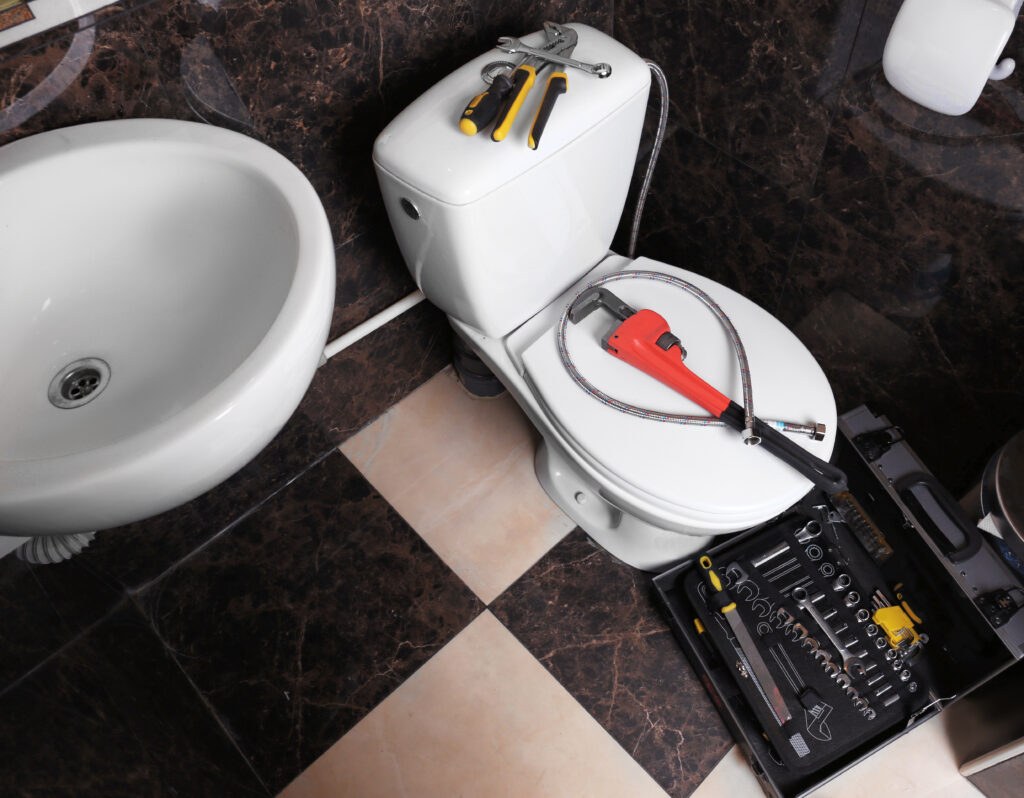
This guide lists seven signs that a toilet has reached the end of its life, shows how to check each one, and explains when a repair is the better call. It also covers California’s fixture rules and Downey’s hard water, two local factors that most toilet guides skip.
- Usually a repair: a running toilet, a slow-filling tank, or a leak from a worn flapper, fill valve, supply line, or wax ring.
- Usually a replacement: a cracked bowl, tank, or base, scale that keeps the flush weak, and the same part failing again and again.
- Check the age: California law treats a toilet manufactured to use more than 1.6 gallons per flush as noncompliant, and sellers must disclose it.
- Call for service: water on the floor, a base that rocks, or a leak that returns after you fix it. Close the supply valve behind the toilet while you wait.
Get a Straight Answer on Repair or Replacement
Our licensed plumbers inspect the toilet, the flange, and the supply line, then explain the repair and replacement options before work begins. Call 562-646-1221 to book toilet replacement and repair in Downey, or request service online.
What Does It Mean When a Toilet Reaches the End of Its Life?
A toilet has two kinds of parts. The porcelain bowl and tank last a long time, and they do not heal when they crack. The flush parts, the supply line, and the wax ring wear out, and replacing them counts as routine repair. A toilet reaches the end of its life when the porcelain fails, when scale or design problems that repairs cannot fix limit the flush, or when repairs stop holding.
Standards changed over the years too. The EPA’s WaterSense fact sheet on tank-type toilets notes that older, inefficient toilets use as much as six gallons per flush, that the current federal standard is 1.6 gallons per flush, and that WaterSense labeled toilets use 1.28 gallons per flush or less. California Civil Code section 1101.3 calls a toilet manufactured to use more than 1.6 gallons per flush a noncompliant plumbing fixture.
The seven signs below turn those facts into checks you can run in a few minutes. After the signs, a decision table shows which problems call for a repair first and which problems point to replacement.
What Wears Out a Toilet?
Five conditions explain most toilet failures. Knowing them makes the signs easier to read.
Flush Parts and Seals That Wear
The flapper, the fill valve, the chain, and the wax ring all wear with use. The EPA’s Fix a Leak Week guidance states that old or worn toilet flappers can cause leaks, and it reports that the average household’s leaks waste more than 9,300 gallons of water every year. Our post on common toilet problems and fixes covers the parts and the repairs.
Hard-Water Scale
Water enters the bowl through small holes under the rim. Kohler’s guidance on poor rim wash states that hard water deposits can restrict the water flow through the rim holes. Downey’s water is hard, a point the local section below explains with numbers.
Movement at the Base
A toilet seals to the floor flange with a wax ring. A toilet that rocks can break that seal, and the result is a leak at the base that soaks the floor over time. Loose closet bolts, an uneven floor, and a damaged flange all cause movement.
Cracks in the Porcelain
Impact, long-term stress, and over-tightened bolts can crack porcelain. A crack rarely stays small, because water finds the opening and widens the damage.
Age and Design
Older toilets use more water per flush, and some models never flushed well. Our post on whether high-efficiency toilets are worth it explains how the newer designs differ, and our overview of the water-saving advantages of updating toilets, aerators, and shower heads covers the broader picture.
7 Signs Your Toilet Has Reached the End of Its Life
Check each sign in order. One sign alone calls for a closer look, and several together make replacement likely.
Sign 1: Cracks in the Bowl, Tank, or Base
Porcelain does not heal. A hairline crack in the tank can seep, and a crack in the bowl or base can leak onto the floor. Look for a thin line that stays wet after you dry it, water that tracks down the outside of the tank, or a dark ring at the base. We replace a cracked toilet instead of patching it, and we recommend a call before the water reaches the subfloor.
Sign 2: A Leak or Running Water That Repairs Do Not Stop
Start with the EPA’s dye test. Put a few drops of food coloring in the tank, wait about ten minutes, and check the bowl. Color in the bowl means the tank leaks into the bowl. Flush right after the test so the color does not stain the tank. A new flapper or fill valve fixes most of these leaks, so repair comes first.
Replacement makes sense when the flush valve seat or the tank itself has damage, or when new parts fail again. For leaks that you cannot find, our water leak detection service and our guide to detecting water leaks help trace them.
Sign 3: Clogs That Return After the Line and Vent Check Out
A toilet that clogs under normal use, even though the vent, the trap, and the line check out, may have a trapway or flush design that no longer works. Our guide to a toilet that keeps clogging every few days walks through the other six causes, so rule those out first. When they check out, replacement ends the clogs. Our toilet unclogging and cleaning service clears the line while you decide.
Sign 4: A Weak Flush That Cleaning Does Not Fix
Check the tank water level against the waterline and open the supply valve fully, then clean the rim holes as Kohler describes: shut off the water, clear stubborn holes with a paper clip or a finishing nail, and pour a lime-dissolving cleaner into the rim chamber for 8 to 24 hours. Follow the product label, and never mix cleaners.
When the flush stays weak after those steps, or when scale returns within weeks, the toilet may have reached the end of its useful life. Hard water accelerates the problem, and our post on how hard water damages plumbing explains where else scale builds up.
Sign 5: A Base That Rocks or Leaks After a Reset
A toilet that rocks or leaks at the base often needs a reset with a new wax ring or a repair to the flange, and that counts as a repair. It becomes a replacement when the base itself cracks, when the toilet will not sit true on the flange after a reset, or when water has softened the floor around it. A plumber checks the floor before setting any toilet, and dry paper laid around the base shows where moisture appears.
Sign 6: The Same Parts Keep Failing, or Parts No Longer Exist
A toilet that needs the same repair again and again is telling you something about the parts around it or the porcelain itself. Parts for older or discontinued models can also be hard to find, and universal parts do not always fit. When a repair repeats, ask a plumber to explain both options.
Sign 7: The Toilet Predates Current Water Standards
Civil Code section 1101.3 defines a noncompliant toilet as one manufactured to use more than 1.6 gallons of water per flush. Section 1101.4 requires replacing noncompliant fixtures as a condition of final permit approval for building alterations or improvements to single-family property, sets January 1, 2017 as the owner deadline for single-family homes, and requires sellers to disclose noncompliant fixtures in writing. This is general information, not legal advice.
Check the markings inside the tank and on the back of the bowl, which often list a date code and the flush volume. The EPA reports that older toilets use as much as six gallons per flush, while WaterSense labeled toilets use 1.28 gallons or less. A plumber can read the markings when they have worn away.
Repair or Replace? A Decision Table
Use the table after you run the checks. Each row pairs a symptom with the cases that call for a repair and the cases that call for replacement.
| Symptom | Repair First When | Replace When |
|---|---|---|
| Constant running or phantom flushes | A flapper, fill valve, or chain has worn out | The flush valve seat or the tank has damage, or new parts fail again |
| Weak or incomplete flush | The tank level is low, the supply valve sits partly closed, or scale blocks the rim holes | The flush stays weak after cleaning, or scale returns within weeks |
| Repeat clogs | A habit, a vent, a trap, or a line problem turns up | The line, the vent, and the rim holes check out and the toilet still clogs |
| Leak at the base | Bolts have loosened, the wax ring has worn out, or the flange needs repair | The base cracks, or the flange or floor prevents a true seat |
| Rocking or wobbling | Bolts, shims, or an uneven floor cause the movement | The porcelain cracks or the flange has damage |
| Cracks in the bowl, tank, or base | No lasting repair exists for porcelain | Always, once a plumber confirms the crack |
| Age and flush volume | The toilet meets current standards and works well | The toilet uses more than 1.6 gallons per flush, or you want a WaterSense model |
A replacement also gives you the chance to match the toilet to the room. Our post on raised toilets and sinks in a bathroom remodel explains the height options, and our bathroom remodeling covers larger projects.
DIY Checks vs Professional Service for a Failing Toilet
A few checks are safe for any homeowner. Anything that involves the flange, the floor, or the water supply behind the wall belongs to a plumber.
Safe DIY Steps
- Run the dye test with food coloring in the tank, and flush right after you read the result.
- Check that the tank fills to its waterline, and look at the flapper and chain for wear.
- Dry the floor and the base, lay a strip of dry paper around the base, and look for moisture after a few flushes.
- Press gently on each side of the toilet to see whether it rocks. Do not keep tightening the bolts, because porcelain can crack.
- Read the markings inside the tank and on the back of the bowl, and write down the date code and flush volume.
- Photograph any crack, stain, or leak, and note when the problem started.
Our guide to how to replace a toilet shows the steps for homeowners who want to do the swap themselves. Close the shut-off valve behind the toilet at the first sign of water on the floor.
What Belongs to a Licensed Plumber
- Resetting a toilet with a new wax ring, and repairing or replacing the flange.
- Replacing a cracked or worn-out toilet, and checking the supply line and shut-off valve.
- Repairing a softened or damaged floor around the toilet.
- Tracing a leak that does not show in the tank, at the base, or at the supply line.
- Any clog that returns after the vent and the line check out.
What Happens During a Toilet Replacement Visit
A replacement visit follows the same sequence each time, so you know what to expect.
- The plumber inspects the toilet and confirms the cause, so you do not replace a toilet that a line problem caused.
- The plumber shuts off the water, drains the tank and bowl, and disconnects the supply line.
- The plumber removes the old toilet and inspects the flange and the floor underneath.
- The plumber sets a new wax ring and the new toilet, then levels and secures it.
- The plumber reconnects the supply line, then tests the flush and checks the seal for leaks.
- The plumber explains anything found along the way, including any floor or flange repair.
Toilet Repair and Replacement in Downey and Nearby Cities: Local Conditions That Matter
Downey’s water is hard, and hard water accelerates scale in the rim holes. The City of Downey’s 2022 Public Health Goals report includes annual water quality reports for 2019, 2020, and 2021 that list average total hardness of 15, 19, and 15.7 grains per gallon, roughly 257 to 325 mg/L. The U.S. Geological Survey ranks water above 180 mg/L as very hard. A rim hole check every few months keeps scale from building, and our water filtration systems list treatment options for the whole home.
The City of Downey’s homeowner alert on sewer laterals notes that builders constructed most of Downey’s homes in the 1940s through 1960s. Toilets from several eras can sit under one roof, so check the markings in each bathroom instead of assuming they match.
Renters make up a large share of local households. U.S. Census QuickFacts for Downey reports that owners occupy 51.1 percent of occupied homes (2020 to 2024 estimates), so renters occupy about 49 percent.
Renters should report a leaking or cracked toilet to the landlord or property manager in writing and keep a copy. California Civil Code section 1941.1 lists plumbing facilities that stay in good working order among the conditions of a habitable rental. This is general information, not legal advice.
Before a sale, a complete plumbing system checkup identifies fixtures above the 1.6-gallon limit, along with the leaks and worn valves that buyers notice. Our plumbers serve homes and businesses throughout the area, including Downey, Whittier, Cerritos, Lynwood, Santa Fe Springs, and Long Beach.
Frequently Asked Questions: Repair or Replace a Toilet
How do I decide whether to repair or replace my toilet?
Repair when a worn part causes the problem, such as a flapper, fill valve, wax ring, or supply line. Replace when the porcelain cracks, when scale or wear keeps the flush weak after cleaning, when the same repair fails again, or when the toilet predates current water standards. A plumber can inspect the toilet, the flange, and the floor and explain both options before any work begins.
What are the signs that a toilet has reached the end of its life?
Seven signs point that way: cracks in the bowl, tank, or base, a leak that repairs do not stop, clogs that return after the line and vent check out, a weak flush that cleaning does not fix, a base that rocks or leaks after a reset, the same parts failing again, and a toilet that uses more than 1.6 gallons per flush. One sign alone calls for a closer look, and several together make replacement likely.
Can a cracked toilet bowl or tank be repaired?
We recommend replacement. Porcelain does not heal, and a crack in the bowl, tank, or base can leak onto the floor and soak the subfloor. A hairline crack in the tank may seep slowly before anyone notices it. Turn off the water supply at the shut-off valve behind the toilet, and call a plumber to confirm the crack and set a replacement.
Why does my toilet keep running, and when does it need replacing?
Worn parts cause most running toilets. The EPA states that old or worn toilet flappers can cause leaks, and a new flapper or fill valve often ends the problem. Replacement makes sense when the flush valve seat or the tank is damaged, or when new parts fail again. Try the dye test first to confirm a leak between the tank and the bowl.
How do I check my toilet for a hidden leak?
Use the EPA’s dye test. Put a few drops of food coloring in the tank, wait about ten minutes, and check the bowl. Color in the bowl means the tank leaks into the bowl. Flush right after the test so the color does not stain the tank. A leak that shows no color can still sit at the supply line or the base, so dry those areas and look for moisture.
Why is water leaking around the base of my toilet?
A leak at the base usually points to a worn wax ring, loose closet bolts, or a flange problem, and a cracked base can also leak. Condensation on a cold tank can drip and look like a leak, so dry the area and watch where the water appears. A plumber resets the toilet with a new wax ring and checks the flange and floor, and replacement follows when the base or the floor has damage.
Why does my toilet rock or wobble?
A rocking toilet moves against the wax ring and the floor flange, which can break the seal and cause leaks. Common causes include loose closet bolts, an uneven floor, a worn wax ring, or a damaged flange. Do not keep tightening the bolts, because porcelain can crack. A plumber resets the toilet or repairs the flange, and replacement follows when the porcelain cracks.
Will a new toilet stop my repeat clogs?
Only when the toilet causes the clogs. Check the vent, the trap, the branch line, the sewer lateral, and the rim holes first, because a new toilet cannot fix a blocked line. Our guide to a toilet that keeps clogging lists those causes. When everything else checks out and the toilet still clogs under normal use, replacement ends the problem.
How do I find out how many gallons my toilet uses per flush?
Check the tank lid, the inside of the tank, and the back of the bowl for manufacturer markings, which often list a date code and the flush volume. A plumber can identify the model if the markings have worn away. California Civil Code section 1101.3 treats a toilet manufactured to use more than 1.6 gallons per flush as noncompliant.
Does California require me to replace an older toilet?
Civil Code section 1101.3 defines a noncompliant toilet as one manufactured to use more than 1.6 gallons per flush. Section 1101.4 requires replacing noncompliant fixtures as a condition of final permit approval for building alterations to single-family property, sets January 1, 2017 as the owner deadline for single-family homes, and requires sellers to disclose noncompliant fixtures in writing. This is general information, not legal advice.
What does the WaterSense label mean on a toilet?
The EPA states that WaterSense labeled toilets use 1.28 gallons per flush or less, which sits 20 percent below the federal standard of 1.6 gallons, and that independent certification covers both performance and efficiency. The label helps you choose a replacement that flushes well and uses less water. A plumber can recommend models that fit your bathroom layout.
Does hard water damage toilets?
Hard water leaves mineral deposits. Kohler states that hard water deposits can restrict water flow through the rim holes, and that restriction weakens the flush. Downey’s water ranks very hard on the USGS scale, with City reports listing 15 to 19 grains per gallon. Regular rim hole cleaning helps, and a water treatment system reduces new scale throughout the home.
Can I replace a toilet myself?
Some homeowners do, and our guide to replacing a toilet shows the steps. The risk sits at the floor: a toilet that sits crooked or seals poorly on the flange can leak at the base and damage the floor over time. A plumber checks the flange, the floor, and the supply line, sets a new wax ring, and tests the flush and the seal before leaving.
What happens during a toilet replacement visit?
The plumber confirms the cause, shuts off the water, drains and disconnects the toilet, and removes it. Next comes an inspection of the flange and the floor, a new wax ring, and a level, secure installation of the new toilet. The plumber then reconnects the supply line, tests the flush and the seal for leaks, and explains anything found along the way.
Does Downey Plumbing Heating & Air Conditioning repair and replace toilets?
Yes. Our licensed plumbers (CA License #731172) repair running toilets, fix leaks, clear clogs, and replace toilets across Downey and nearby cities, and emergency service is available 24 hours a day, 7 days a week. We inspect the toilet, the flange, and the supply first, then explain the repair and replacement options before any work begins.
When to Call Downey Plumbing Heating & Air Conditioning About a Failing Toilet
Call us when you see a crack, when water reaches the floor, when the base rocks or leaks, or when the same repair fails twice. Our licensed plumbers inspect the toilet, the flange, and the supply line, then explain when a repair makes sense and when replacement does. Emergency service is available 24 hours a day, 7 days a week.
| What We Offer | What It Means for You |
|---|---|
| CA License #731172 (CSLB Verified) | Check our license status on the CSLB license lookup before you hire any contractor |
| BBB A+ Accreditation | A third-party rating from the Better Business Bureau, available to review on our BBB profile |
| 850+ Yelp Reviews, 4.8 Stars | Real customer feedback you can read in full on Yelp |
| Serving Southern California Since 1930 | 90+ years of plumbing and HVAC experience in the region |
| Fully Licensed and Insured | General liability and workers’ compensation coverage protect your property and your household |
| 24/7 Emergency Service | Licensed technicians on call at any hour, including weekends and holidays |
| Residential and Commercial | One company for homes, rentals, restaurants, offices, and retail properties |
| Plumbing and HVAC Under One Roof | One call covers water heaters, drains, leaks, air conditioning, and heating |
| Repair and Replacement Under One Roof | We repair, unclog, and replace toilets, so one company handles the whole decision |
| Both Options Explained | We explain when a repair makes sense and when replacement does, before work begins |
Review our CSLB license record, our BBB A+ profile, and our 850+ Yelp reviews at any time to confirm what Downey customers read here.
Schedule a Toilet Repair or Replacement in Downey Today
Downey Plumbing Heating & Air Conditioning is licensed (CA License #731172), fully insured, and BBB A+ rated, and we answer plumbing calls 24/7. Call 562-646-1221 or contact us online to have a licensed plumber inspect your toilet and tell you whether a repair or a replacement fits.


