


How Running Your AC on Low Refrigerant Slowly Destroys the Compressor
Downey Plumbing Heating & Air Conditioning, licensed by the California State License Board under CA License #731172, BBB A+ Accredited, and rated 4.8 stars across 850+ Yelp reviews, has diagnosed refrigerant-related compressor failures throughout Downey and surrounding communities for over 90 years. The conversation is always the same: the homeowner noticed weaker cooling weeks or months ago, decided to wait and see, and now the system has stopped entirely. In many of these cases, the compressor, the single most expensive component in the AC system, has accumulated enough internal damage that repair is not possible. The compressor that could have been saved with prompt refrigerant service now requires full replacement.
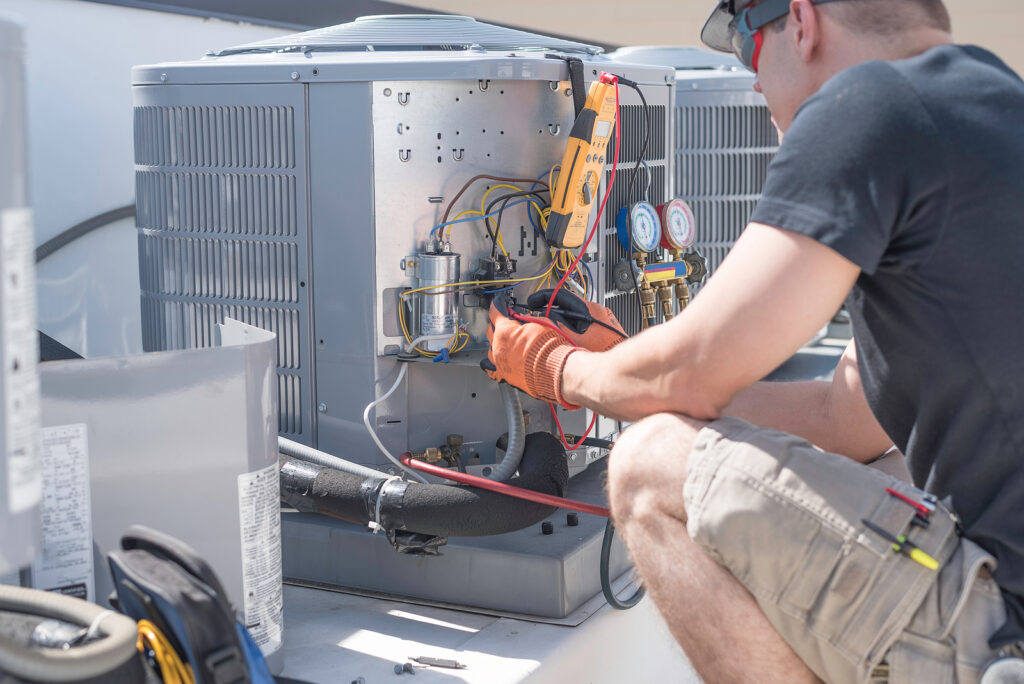
A refrigerant leak that reduces charge by 20 to 30 percent does not cause an immediate breakdown. It causes something more expensive: weeks or months of the compressor operating under conditions that damage motor windings, reduce internal lubrication, and increase the risk of liquid refrigerant entering components designed only to handle gas. This post explains the four mechanisms through which low refrigerant destroys compressors, and why the answer is always prompt service rather than waiting.
Call 562-646-1221 for same-day refrigerant recharging and recovery service including electronic leak detection, repair, and charge restoration throughout Downey, Bellflower, Norwalk, and surrounding communities. Contact us online.
What Refrigerant Does in the AC System
Refrigerant circulates in a sealed loop between the indoor evaporator coil and the outdoor condenser. At the indoor evaporator, refrigerant at low pressure absorbs heat from your home’s air as it evaporates from liquid to gas. The compressor then pressurizes this gas, raising its temperature, and delivers it to the outdoor condenser where it releases that heat to the outside air. The refrigerant condenses back to liquid and passes through an expansion device before returning to start the cycle again.
This closed loop contains a fixed, designed amount of refrigerant. Under normal operation with no leaks, the charge does not change. When the charge is low, it is because refrigerant has escaped through a leak, not because it was consumed, burned, or depleted through normal use. This distinction matters: refrigerant loss always means a leak exists and needs to be found.
The Four Mechanisms That Destroy the Compressor
Mechanism 1: Motor Winding Overheating
The suction gas returning from the evaporator coil cools the compressor motor windings as it passes through the compressor body on its way to the compression chamber. This refrigerant gas absorbs heat from the motor, keeping winding temperatures within the design operating range.
When refrigerant charge is low, less mass of refrigerant passes through the compressor on each cycle. Less cooling mass means less heat removed from the motor windings. The motor runs progressively hotter. Over weeks of operation in Southern California’s summer heat, where the compressor may run 10 to 14 hours daily, the elevated winding temperature degrades the insulation coating on the motor windings. Insulation failure is the primary cause of hermetic compressor electrical failure and is not repairable.
Mechanism 2: Lubricating Oil Starvation
Refrigerant does more than carry heat, it also carries compressor oil throughout the entire refrigerant circuit. The oil lubricates all moving parts inside the compressor and is designed to remain in continuous circulation with the refrigerant rather than accumulating in one location. When refrigerant charge drops, the total refrigerant mass flowing through the system on each cycle decreases. The volume of oil circulating with it decreases proportionally. Compressor surfaces that depend on continuous oil film, pistons, valve reeds, crankshaft bearings in reciprocating compressors, or scroll flanks in scroll compressors, receive progressively inadequate lubrication. This wear is cumulative and not reversible after the fact.
Mechanism 3: Liquid Refrigerant Slugging Risk
Compressors are designed to compress gas, which is compressible. Liquid refrigerant is incompressible. When liquid refrigerant reaches the compressor cylinder or scroll, called slugging, the pressure spike it creates in an incompressible fluid can bend or fracture valve reeds in reciprocating compressors, cause catastrophic damage to scroll flanks, or create immediate mechanical failure.
Low refrigerant charge increases slugging risk because less refrigerant in the evaporator coil means the refrigerant may not fully evaporate and superheat before it reaches the suction line to the compressor. Proper refrigerant charge maintains the suction superheat that ensures only gas reaches the compressor. Low charge reduces this protection margin.
Mechanism 4: Elevated Compression Ratio Stress
The compression ratio the compressor operates against is the ratio of discharge pressure to suction pressure. Low refrigerant charge lowers suction pressure while head pressure remains elevated from the same outdoor ambient conditions. This increases the compression ratio, the mechanical work the compressor must perform on each cycle increases. Higher compression ratio generates more internal heat and mechanical stress simultaneously with the already-elevated operating temperature from inadequate refrigerant cooling.
The Timeline: Progressive Damage, Not Sudden Failure
The deceptive aspect of low-refrigerant compressor damage is that the system continues to run and produce some cooling throughout the damage accumulation period. Homeowners interpret continued operation as confirmation that the problem is not urgent. The system produces 80 percent of its normal cooling output. Then 70 percent. Then 60 percent. They wait another month.
By the time the system stops producing cooling entirely, the compressor has typically accumulated months of motor winding degradation, oil starvation wear, and thermal stress. What started as a refrigerant service call becomes a compressor replacement, or, for older systems where compressor replacement cost approaches replacement value, a whole-system replacement decision.
Why Finding the Leak Is More Critical Than Adding Refrigerant
Adding refrigerant without locating and repairing the leak restores cooling output temporarily. The same leak continues releasing refrigerant at the same rate. The system returns to low-charge condition in weeks or months. Another recharge is needed. Each interval of low-charge operation between recharges accumulates additional compressor damage.
The EPA’s Section 608 refrigerant regulations establish that refrigerant releases to the atmosphere are prohibited. These regulations require licensed technicians to locate and repair leaks rather than simply recharging systems with known leaks above de minimis rates. Proper refrigerant service involves electronic leak detection to find the leak, qualified repair, and then charge restoration, addressing both the immediate charge deficit and the underlying cause. See our post on why your AC struggles during the day but cools at night for more on how refrigerant charge affects cooling performance patterns.
Southern California Context: Why This Matters More Here
Downey and surrounding communities run air conditioning for approximately five to six months annually with outdoor temperatures regularly reaching 90 to 105 degrees Fahrenheit. High ambient temperatures increase head pressure in the refrigerant circuit, forcing the compressor to work against more resistance. This means a low-charge condition creates more compressor stress per operating hour in Southern California summer conditions than the same condition in a milder climate.
The U.S. Department of Energy recommends professional HVAC maintenance including refrigerant level verification annually for exactly this reason, identifying developing charge loss before it progresses to compressor damage. Annual AC maintenance that includes refrigerant pressure verification entering the summer season is the most practical way to catch low-charge conditions before they cause compressor harm.
| Why Choose Downey Plumbing | What It Means for You |
| CA License #731172 (CSLB) | Verify credentials at cslb.ca.gov before hiring any contractor |
| BBB A+ Accreditation | Highest BBB rating with zero unresolved complaints |
| 850+ Yelp Reviews, 4.8 Stars | Real customer quality proof across hundreds of Southern California service calls |
| Serving the Region Since 1930 | 90+ years of local expertise no newer company can match |
| Fully Licensed and Insured | General liability and workers compensation protecting your property |
| 24/7 Emergency Service | Licensed on-call technicians available at any hour |
Frequently Asked Questions: AC Refrigerant and Compressor Damage
What does refrigerant actually do inside an AC system?
Refrigerant is the heat transfer medium that circulates in a sealed loop between the indoor evaporator coil and the outdoor condenser unit. At the evaporator coil, refrigerant at low pressure absorbs heat from indoor air as it evaporates from liquid to gas. The compressor then pressurizes this gas, raising its temperature, and sends it to the outdoor condenser where it releases that heat to the outdoor air as it condenses back to liquid. The refrigerant then passes through an expansion device that lowers its pressure before returning to the evaporator coil to begin the cycle again.
How does low refrigerant charge specifically affect the compressor?
Low refrigerant charge reduces the suction pressure on the low-pressure side of the compressor. This means the refrigerant gas reaching the compressor is at a lower pressure and temperature than designed, creating several concurrent problems: the refrigerant absorbs less heat at the evaporator, the refrigerant mass flow carrying oil through the system decreases, the temperature inside the compressor rises from reduced cooling, and the compression ratio the compressor must operate against increases. All of these simultaneously stress the compressor in ways that cause measurable damage over weeks and months of operation.
Why does low refrigerant charge cause the compressor to run hotter than normal?
The suction gas returning to the compressor from the evaporator coil normally acts as a cooling medium for the compressor motor windings. This return gas absorbs heat from the motor as it passes through, keeping winding temperatures within the design operating range. When refrigerant charge is low, less mass of refrigerant passes through the compressor on each cycle, providing less cooling to the motor windings. The motor runs progressively hotter with each operating cycle. Sustained elevated motor temperature degrades the insulation on motor windings, the primary failure mode of hermetic AC compressors worldwide.
Does refrigerant carry lubricating oil and what happens to oil circulation when charge is low?
Yes. Refrigerant carries compressor oil throughout the entire refrigerant circuit. The oil lubricates the compressor’s moving parts, pistons, valve reeds, and crankshaft bearings in reciprocating compressors, or the scroll surfaces in scroll compressors, and is then carried out of the compressor with the refrigerant and recirculated back. When refrigerant charge is low, the total refrigerant mass flowing through the system on each cycle decreases. This reduces the volume of oil circulating and returning to the compressor. Compressor surfaces that depend on that oil film for lubrication operate with progressively inadequate protection, accelerating wear.
How long can an AC run on low refrigerant before the compressor is permanently damaged?
There is no single answer because damage progression depends on how low the charge is, how long the system runs each day, outdoor temperatures, and the compressor’s age and prior condition. A mild charge deficit of 10 to 15 percent might allow months of operation with gradual wear accumulation. A severe deficit of 30 to 40 percent can cause significant damage within a few weeks of peak-demand summer operation when the compressor runs many hours per day. The consistent finding is that by the time the system shows obvious failure symptoms and stops cooling entirely, the compressor has already accumulated internal damage that makes repair impossible.
What symptoms indicate that an AC is running with low refrigerant?
Common indicators include cooling output that is noticeably weaker than prior seasons with the same outdoor temperatures, ice or frost forming on the refrigerant lines near the indoor unit or on the indoor coil, longer run cycles needed to bring the home to setpoint, warm air from vents despite the outdoor unit running, and higher electricity bills from extended run times. Some low refrigerant situations also produce a faint hissing or bubbling sound near the indoor unit or along refrigerant line connections where the leak exists. These symptoms overlap with other AC problems, so professional pressure testing is the only reliable confirmation.
Is low refrigerant charge a normal maintenance item that happens over time?
No. Refrigerant does not deplete through normal AC operation. The refrigerant circuit is a sealed loop designed to contain the refrigerant indefinitely with no consumption or depletion under normal conditions. When refrigerant is low, the cause is a leak: at a flare fitting, at a brazed joint, at an indoor coil connection, or elsewhere in the refrigerant circuit. Adding refrigerant without finding and repairing the leak means the system will return to the same low-charge condition. The U.S. Environmental Protection Agency’s Section 608 regulations establish that refrigerant releases to the atmosphere are prohibited, underscoring that leaks must be repaired rather than repeatedly recharged.
Why is finding and repairing the refrigerant leak more important than adding refrigerant?
Adding refrigerant restores cooling output temporarily but does not address the source of the charge loss. A system that was recharged without leak repair will lose its charge again, returning to the same low-charge condition that is damaging the compressor. The interval between recharges shortens as the leak point worsens. Each additional period of low-charge operation accumulates more compressor damage. Proper refrigerant service locates the leak using electronic detection equipment, repairs it, and then restores the refrigerant charge to manufacturer specifications, addressing both the immediate charge deficit and the underlying cause.
Can the compressor recover after the refrigerant is recharged to proper levels?
If the refrigerant is restored before motor winding insulation has degraded below the failure threshold and before significant mechanical wear has occurred, the compressor can continue to function adequately. The earlier in the low-charge condition the refrigerant is restored, the more likely a full return to normal operation. However, the internal wear that accumulates from oil starvation and elevated temperatures is not reversible, early restoration limits further damage progression but does not repair the wear that has already occurred. Systems that run a complete summer on low charge frequently develop compressor failure within the following one to two seasons.
What is liquid refrigerant slugging and why is it particularly dangerous to compressors?
Liquid slugging occurs when liquid refrigerant rather than gas reaches the compressor inlet and enters the compression chamber. Compressors are designed to compress gas, which is compressible. Liquid is incompressible. When liquid refrigerant enters the compression chamber, the pressure spike it creates can bend or break valve reeds, damage piston heads in reciprocating compressors, or damage scroll flanks in scroll compressors. This can cause catastrophic immediate failure or create damaged valve components that progressively reduce compression efficiency. Low refrigerant charge increases slugging risk because less refrigerant in the evaporator coil may not fully evaporate before reaching the suction line.
Who is legally authorized to handle refrigerant in California?
The U.S. Environmental Protection Agency’s Section 608 of the Clean Air Act requires that technicians who purchase and handle regulated refrigerants, including R-410A and the R-32 refrigerant now used in newer equipment, hold EPA Section 608 certification. California additionally requires that refrigerant handling be performed by licensed HVAC contractors with appropriate state licensing. Property owners may not legally purchase or handle refrigerants. Any contractor offering refrigerant service without EPA Section 608 certification is operating illegally, which means any related warranty claims may be voided and the work is not code-compliant.
How much more expensive is compressor replacement than a refrigerant service with leak repair?
A complete refrigerant service, locating the leak, repairing it, and restoring the proper charge, is a fraction of the cost of compressor replacement. A residential compressor replacement depending on system size and brand typically costs several times more than a refrigerant service, and often involves labor costs for recovery, replacement, recharging, and associated component changes. For a system where the compressor has already failed, the comparison often becomes repair versus full system replacement, where the compressor cost approaches or exceeds the value of replacing the entire unit. The financial case for prompt refrigerant service when low charge is suspected is clear.
Can running on low refrigerant cause ice to form on the indoor unit?
Yes. Low refrigerant charge reduces the pressure on the suction side of the system, which lowers the evaporator coil temperature below the normal operating range, in some cases below freezing. When the coil temperature drops below 32 degrees Fahrenheit, moisture from the air passing over it freezes rather than draining as condensation. Ice builds progressively on the coil surface and begins blocking airflow. The system may then cycle off on a safety switch or simply deliver increasingly little cooling as the ice layer insulates the coil. If you notice ice on the indoor unit or refrigerant lines, turn the system off and schedule service, continuing to run an iced system risks additional compressor damage.
How does Southern California’s summer heat affect the damage rate from low refrigerant?
Southern California’s extended summer with outdoor temperatures regularly reaching 90 to 105 degrees creates the conditions where low-refrigerant damage accelerates most. High ambient temperatures increase head pressure on the compressor. The compressor works harder against higher head pressures, generating more internal heat at the same time that reduced refrigerant mass is providing less cooling to the motor windings. Peak-demand summer conditions in the Downey area can produce more compressor damage per operating hour from low refrigerant than the same system would experience in a milder climate running the same number of hours.
What should I do if I suspect my AC is running on low refrigerant?
Call a licensed HVAC technician for a refrigerant pressure test rather than waiting to see if the problem resolves. A manifold gauge test takes a few minutes and confirms whether the refrigerant charge is within the manufacturer’s specified range. Do not continue running the system for multiple seasons if cooling performance has declined progressively, if ice has appeared on the indoor unit, or if the system is running much longer than in prior years to achieve the same comfort level. Each operating day on a low charge reduces how much compressor life remains. Call 562-646-1221 for same-day refrigerant diagnosis throughout Downey and surrounding communities.
When to Call Downey Plumbing Heating & Air Conditioning
If your AC is producing noticeably less cooling than prior summers, running significantly longer cycles, has produced ice on the indoor unit or refrigerant lines, or if an HVAC technician has indicated refrigerant service is needed, prompt action prevents the situation from progressing to compressor damage. Downey Plumbing Heating & Air Conditioning provides same-day refrigerant recharging and recovery service, including electronic leak detection, qualified leak repair, and charge restoration to manufacturer specifications. Also see our AC condenser repair service for situations where refrigerant damage has already affected outdoor unit components. Call 562-646-1221 for same-day refrigerant service or contact us online.


